

A nationwide movement against AI data centers is starting to win.
People across the US political spectrum are increasingly united in opposing data centers in their communities. Here's how the movement is building power – and how to get involved.

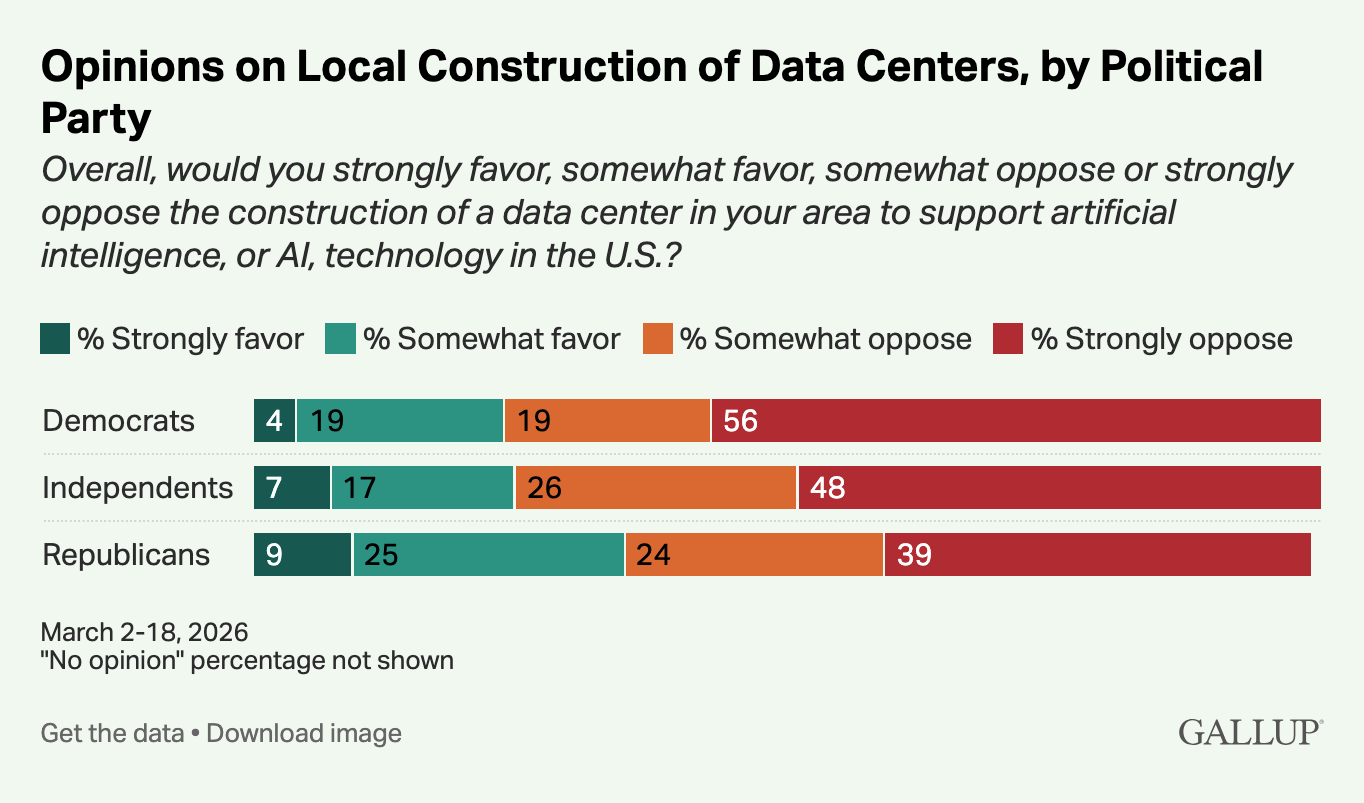
As tech companies race to scale AI, resistance to data centers is fiercely gaining traction. A new Gallup poll found that 70% of US Americans would oppose a data center being built in their local community – and more than half support a national data center ban.
This opposition has spilled over from the comments section into the real world – with hundreds of communities nationwide blocking and delaying a stunning $130 billion in data center projects in just the first quarter of 2026. Here’s what the resistance is actually against, and why this fight matters so much.
Why do they need so many effing data centers?
America’s largest tech companies – NVIDIA, OpenAI, Anthropic, Google, Meta, SpaceXAI – are pouring trillions of dollars into developing and deploying AI technology. The level of investment has gotten so extreme that now the entire stock market is being propelled by AI companies. Much of that investment is going straight into data center construction across the USA.
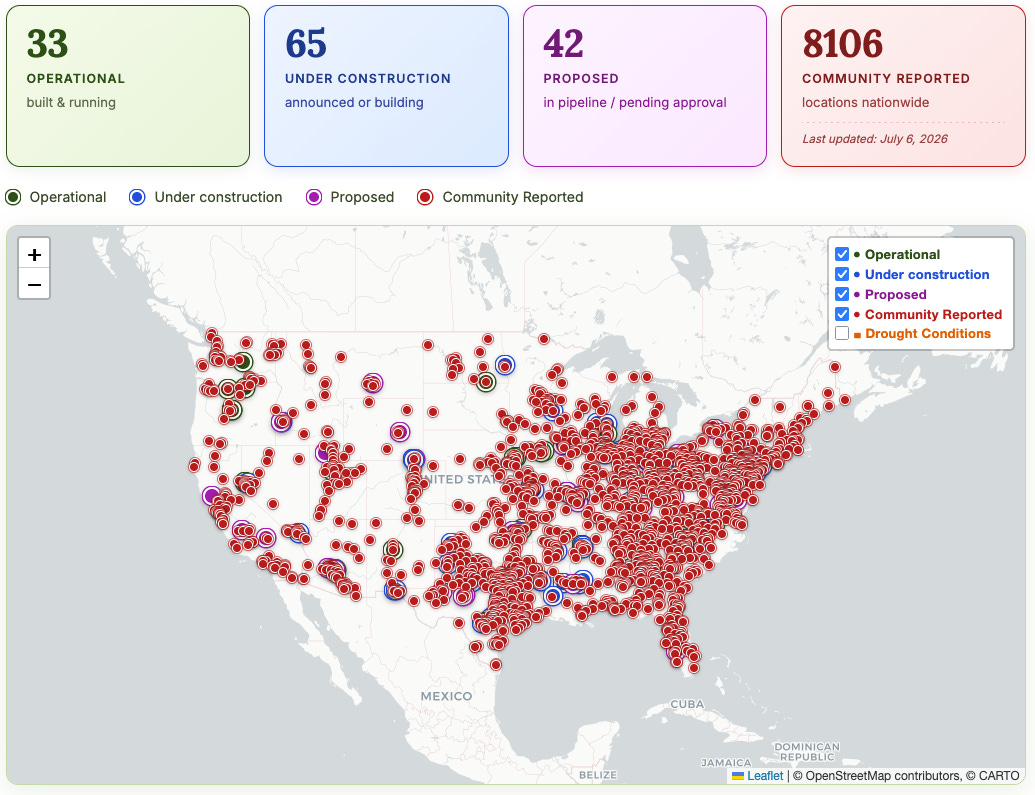
Just look at this map of planned and operational data centers nationwide:
If you’re wondering why these companies are building so many data centers so quickly, let’s be clear… It’s not just for chatbots.
America's biggest tech companies are racing to build ever more powerful AI systems. Many are racing to develop artificial general intelligence (AGI) – AI that matches or surpasses human capabilities across virtually all cognitive tasks. AI enthusiasts believe AGI will allow AI to replace most or all of human labor. “Imagine the incredible economic opportunity,” argue the tech bros – who stand to capture most of this economic opportunity for themselves – “for the country that reaches AGI first… and how devastating it could be to be left behind.”
This is the implicit justification for the “existential” race they say we’re in to achieve AGI before China. It’s a matter of “national security” and “the future of the West” – so the US public should pipe down about all the new data centers and just live with it.
It doesn’t take much to envision how deeply disempowering this future would be for 99.9% of humanity: One where a handful of tech executives command the global economy, and humans are no longer needed for labor.
There’s lots more to say here – whether the whole thing is a bubble (it is); what Silicon Valley’s idea of “progress” is hiding; and whether the tech oligarchs think they even need the working class in their vision for the future. I’ll get into all that in an upcoming post – and I look forward to End Times Fascism by Naomi Klein and Astra Taylor to shed further light on these topics. But for now, back to data centers…
EVERYONE hates data centers.
The US public’s backlash against data centers is broad-based and bipartisan. A recent Gallup poll showed that across all US political groups – Democrats, Independents, and Republicans – the majority of people oppose data centers being built in their neighborhoods.
This shared sentiment is unsurprising when you consider the actual impact that data centers have on the communities in which they are built: Data centers consume enormous amounts of energy, guzzling local water sources – including in drought-ridden states facing water shortages – driving up monthly utility bills, polluting the air (with toxic fumes and endless noise), derailing clean energy efforts, and sparking concern over local property values and public health.
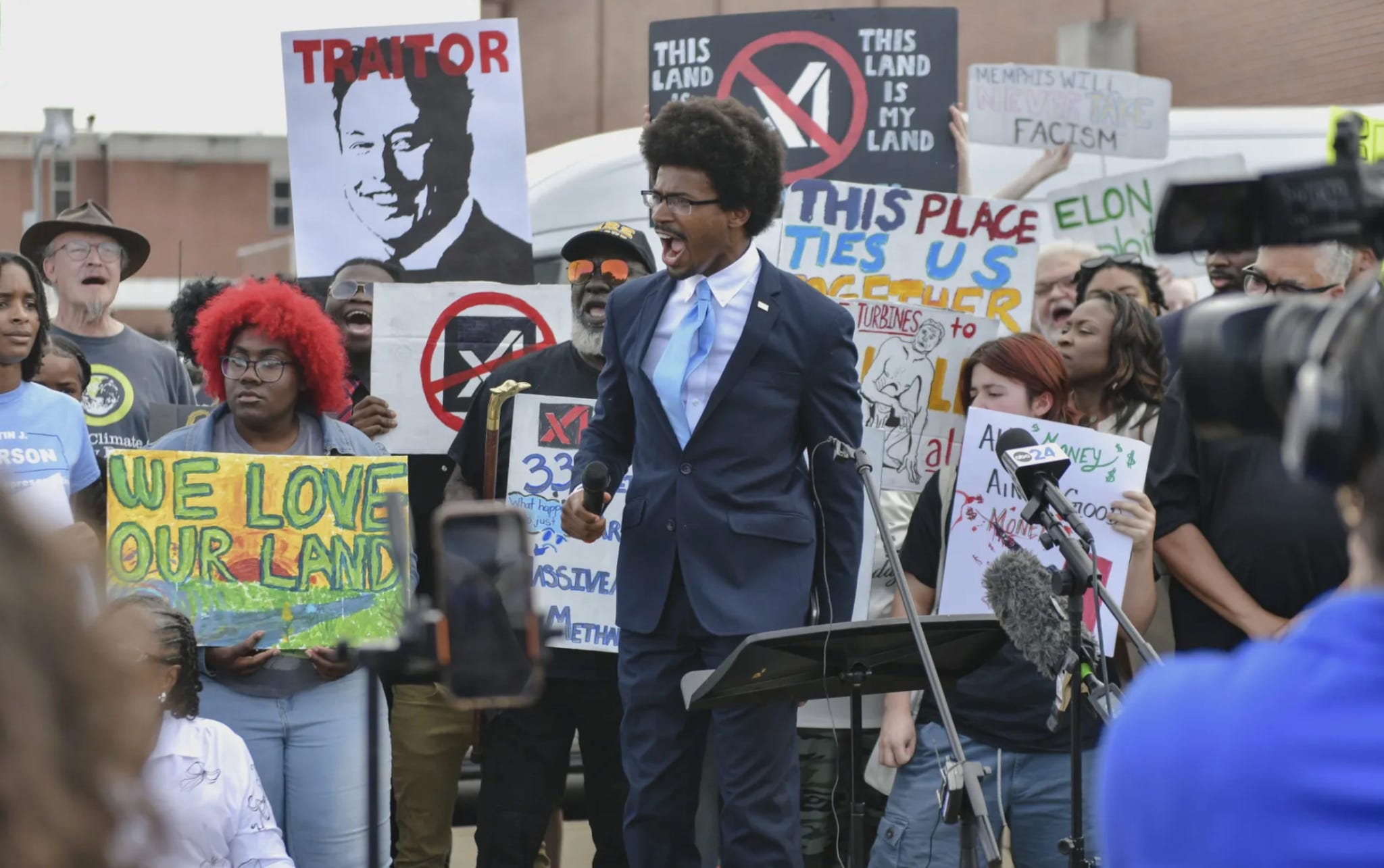
Consider Boxtown, Tennessee, a historically Black neighborhood a few miles from “Colossus” (🙄), Elon Musk’s SpaceXAI data center, which is operating 30+ methane gas turbines without permits or pollution controls. Days after Colossus came online, 28-year old Boxtown resident Alexis Humphreys got her first severe asthma attack in 15 years. 76-year old resident Easter Knox said the air pollution is so bad she “can hardly breathe.”
Data centers are a physical manifestation of a technology most people already resent. Workers are losing their jobs to AI while being forced to adopt it. New college grads are getting hit especially hard, entering the job market at a time when the drawbridge to high paying careers is being raised – and they are not happy.

People are getting dumber from offloading their thinking to AI. Many white collar workers are working more – not less – after integrating AI into their day-to-day tasks. Not to mention that the technology itself was built on the sum of online knowledge created by humans – without any plan to give the public ownership or compensation.
Meanwhile, the latest AI models continue to achieve new and unprecedented levels of intelligence while the benefits for everyday people remain hard to pin down. Data center proponents point to more jobs and tax revenue, but results have been underwhelming on both fronts.
The good news? The public is striking back – and the resistance is growing.
More and more, across the country, the people are rising up against data centers – and it’s working. More than $130 billion worth of data center projects were blocked or delayed in the first quarter of 2026 alone. The number of data centers blocked in Q1 exceeded the total blocked in all of 2025.
Many towns – including Tulsa, Oklahoma; Birmingham, Alabama; and New Orleans, Louisiana – have successfully lobbied for temporary moratoriums, forcing state and local governments to study each project’s environmental and financial impacts on the community before approval. Over 100 communities have already enacted data center restrictions, and 14 states are advancing statewide moratorium proposals.
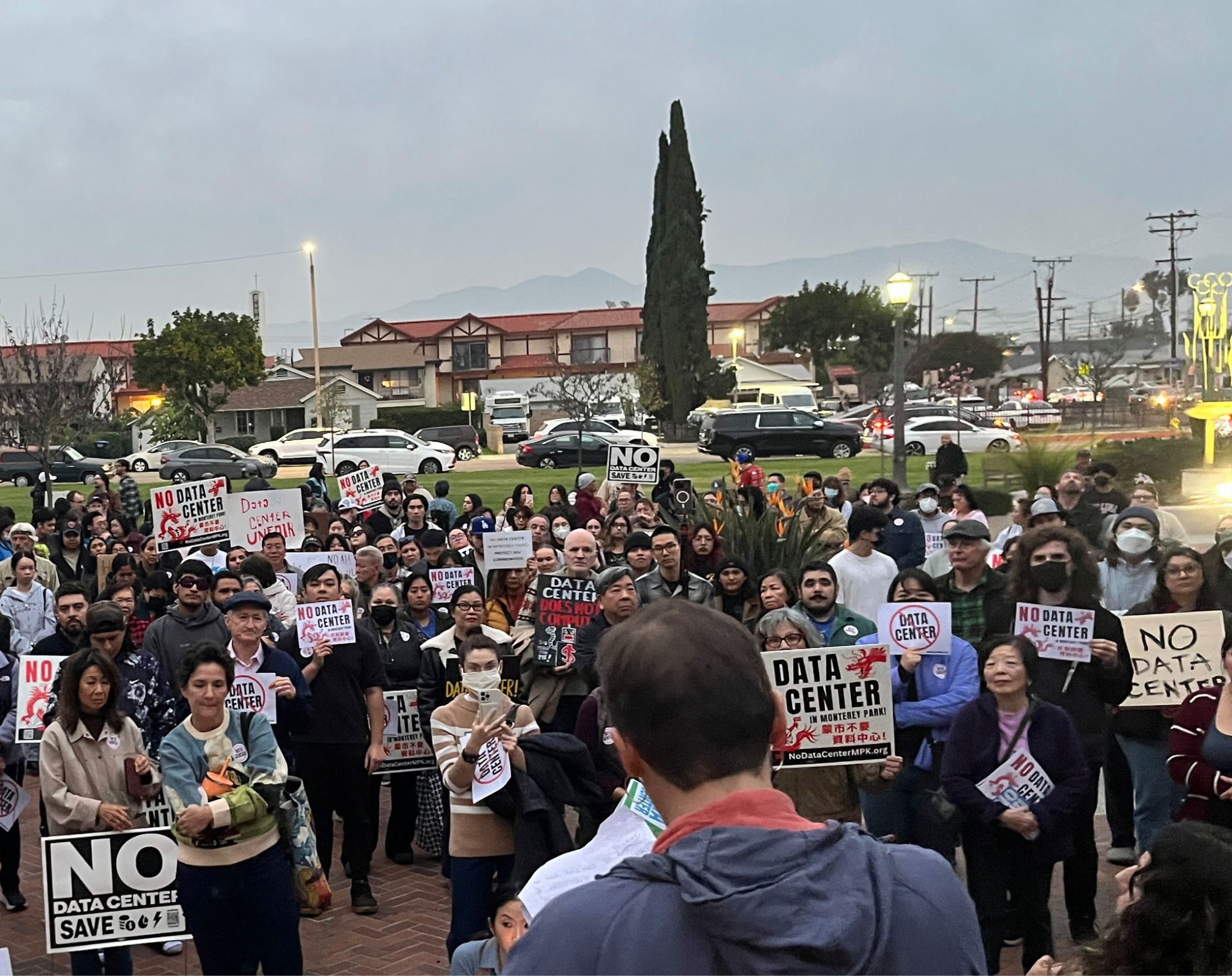
Take Monterey Park, a small city in Los Angeles County. After concluding that a new data center would triple the entire city’s energy demand, residents took swift action, handing out flyers in Spanish, English, and Chinese to fellow residents. The community showed up – they packed city council meetings, pressured their representatives, and forced them to hold a vote. At the end of a grassroots campaign that lasted just 2 months, 86% of voters supported a citywide data center ban in June, making Monterey Park the first US city to permanently ban data centers by public vote.
Now other cities – like Seattle, Washington; and Holyoke, Massachusetts – have followed suit with their own data center bans.
All in the matter of the last few weeks.
The string of successful organizing efforts against data centers has had downstream effects, most notably in the rapidly shifting political Overton window. Within a matter of months, politicians went from facing minimal questions about AI to overwhelming pressure from constituents to speak on AI’s labor, environmental, and social impacts.
In March, Senator Bernie Sanders and Representative Alexandria Ocasio-Cortez introduced a national moratorium to halt data center construction until sufficient safeguards were put in place to protect people from rising electricity costs, protect workers whose jobs will be impacted, and ensure the economic gains of AI actually go to working people. The bill was considered “dead on arrival” in Congress… but it gave local communities and governments a regulatory framework to build on.
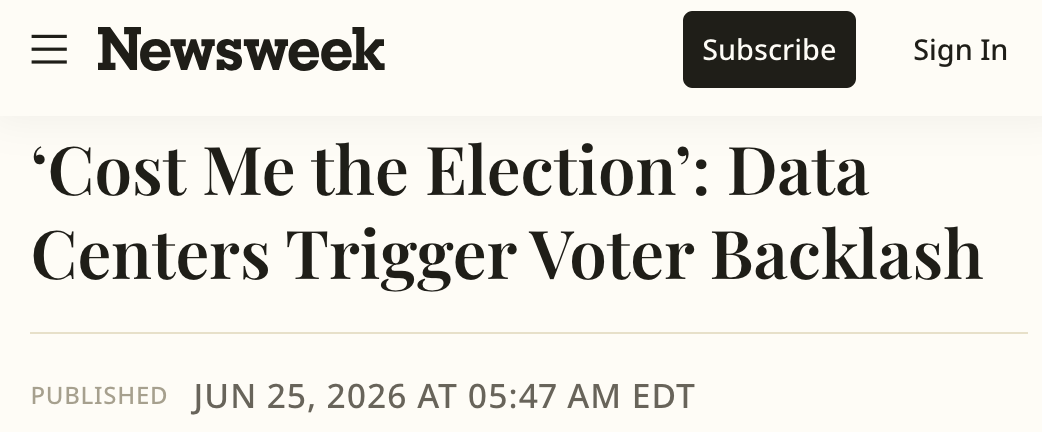
Now the AI resistance movement is shaping elections. In the recent Democratic primaries, several democratic socialist candidates – many running on data center bans – unseated their incumbent opponents. Melat Kiros, a 29-year-old democratic socialist who supports a nationwide data center moratorium, just unseated a 15-term incumbent in her Denver primary. Similar story for union organizer Claire Valdez, who won her Congressional primary in New York while calling for a pause on new data center construction. Democratic socialist Tammy Carpenter won her primary for the Oregon House – and a moratorium on data centers is part of her core policy platform.
In contrast, the latest elections resulted in major losses for candidates who supported highly unpopular data center projects – most notably in Utah, where a state senator and county commissioner both lost their primary elections after supporting celebrity investor Kevin O’Leary’s controversial data center project.
What’s next – and how to join the movement
The people fighting data centers are up against some of the wealthiest people and most powerful corporations on Earth – and they’re winning anyway. Communities are feeling real pain from the data center projects being built, often covertly, in their backyards, and they are refusing to accept it as inevitable.
In the first three months of this year alone, the number of active data center opposition groups more than doubled to 833 across 49 states, according to Data Center Watch. Opposition on that scale doesn’t build from the top down. It builds when ordinary people – neighbors knocking on doors, packing town halls, organizing folks who had never been to a protest in their lives – decide their communities are worth fighting for. This is what real political power looks like. And when we band together to build it, we win.
So if this fight comes to your community – or if you want to help lead it – here’s where to start:
To plug into the national movement, check out the Stop Data Centers Coalition which unites more than 500 health, faith, labor, environmental, and community organizations behind a single demand: no new data centers until they are properly regulated. Their site is the fastest way to find the fight nearest you and add your name to the push for a national moratorium.
If a project is already headed for your area, MediaJustice’s comprehensive toolkit walks community leaders through how to launch a campaign from the ground up. The NAACP’s Stop Dirty Data Centers hub provides templates for negotiating enforceable community benefits agreements when a project can’t be blocked outright.
And if you want to track where these developments are spreading – or report a new one in your own neighborhood – Erin Brockovich’s community-reported map of AI data centers is putting that information directly in the public’s hands.
These fights are being won by everyday people who decided their communities are worth protecting. They are showing us that a better future, one that puts humanity and ecosystems first, is within reach… if enough of us band together and build it.
- Michael
Thank you for reading this article. If you believe we need clearer thinking and more examples of how to build a better future, consider supporting our independent media project by becoming a paid subscriber. Our small team is fueled by this community, and your support will go directly into producing more stories like this one.
There should be a moratorium on NDA's discussing data center build outs as well. I've noticed elected officials throughout the nation not being able even discuss data centers with their constituents after being approached by tech companies. We need open and honest dialog to make informed decisions from our elected officials. Not silence and threats of arrest because they don't have a way to communicate the process with us without being sued themselves.
Especially when I'd reckon 99% of the data is slop now 🙃