

Iran is targeting a hidden engine of US economic power. Here's how.
The Strait of Hormuz, oil in yuan, and the petrodollar system under pressure

As soon as the US and Israel started dropping bombs on Iran, the Strait of Hormuz became a major focal point of the war. Media pundits and economic analysts were quick to point out that 20-25% of global oil trade passes through the strait, making it a major chokepoint for the oil-dependent global economy.
Right now, the strait is closed in response to a US blockade of Iranian ports. Before the closure, Iran was charging oil tankers “tolls” of up to $2M to pass through the Strait of Hormuz… payable only in Chinese yuan.
Why were the tolls only payable in yuan? To understand that essential detail, you need to understand a system that has quietly financed U.S. military dominance and given the U.S. a degree of global economic control unprecedented in modern history.
It’s called the petrodollar system, and right now, Iran is stress-testing it in real time.
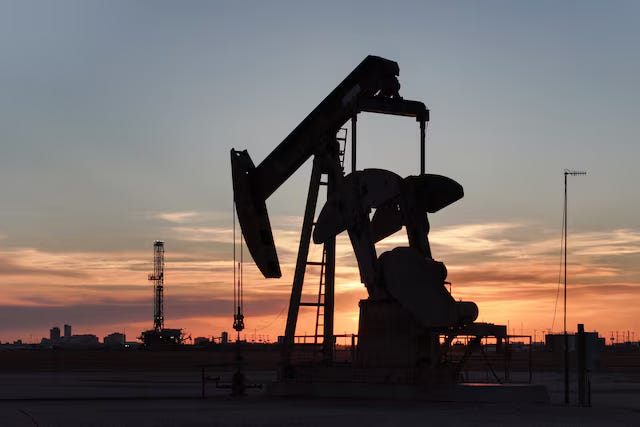
The Petrodollar System: What It Is and How It Started
In 1971, Richard Nixon announced that the dollar would no longer be backed by gold. This announcement, dubbed the “Nixon Shock,” meant the US could print as many dollars as it wanted – but they would no longer be backed by anything physical.
The immediate risk was clear: Since the dollar had been made the global reserve currency in 1944, its dominant position was “insured” by its exchangeability for gold. But if other countries could no longer exchange their dollars for gold, why would they hold dollars at all? What would stop the dollar from rapidly losing its value?
Nixon solved this by creating the petrodollar system, which started in a 1974 deal with Saudi Arabia. The terms of the deal were simple
The U.S. would provide weapons, financial support, and military protection to the House of Saud – a fragile monarchy surrounded by hostile neighbors and internal threats, sitting atop the world’s largest oil reserves.
In exchange, Saudi Arabia would sell all of its oil in U.S. dollars.
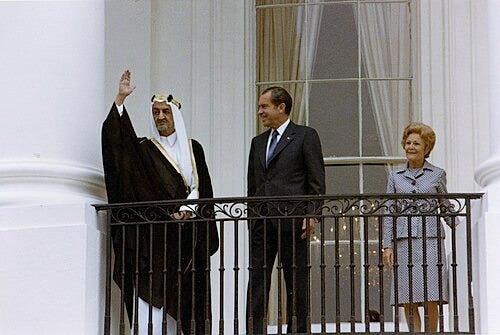
Kuwait, Qatar, and the UAE quickly signed similar deals, and suddenly, the entire global oil market was locked into a relationship with the US dollar.
This was a massive boon for the US, because oil powered – and still powers – the entire global economy: Transportation, manufacturing, agriculture, electricity, construction… The list goes on. If oil had to be purchased in dollars, that meant every country on earth would need dollars.
In other words: Oil replaced gold as a foundational pillar of the US dollar’s value. And this “petrodollar” arrangement has held for fifty years.
How the Petrodollar Became a Tool of Geopolitical Control
The structural demand for dollars (via the petrodollar system) has given the U.S. enormous power to assert dominance over other countries.
Thanks to the high demand for dollars, the US can borrow more cheaply than any nation on earth. It can run persistent trade deficits without the currency crisis that would devastate any other country. The petrodollar has allowed the US to effectively collect a “tax” on the entire global economy, because every dollar held in reserve anywhere in the world was an interest-free loan to Washington.
Oil-producing countries accumulate enormous dollar reserves and park them in U.S. Treasury bonds, which funds U.S. government spending – including the most expensive military in the history of the world. The U.S. spends nearly $1 trillion a year on defense, and a significant share of that military maintains the security guarantee that keeps Gulf monarchies producing oil and pricing it in dollars.
The operating cost of the petrodollar is part of the reason our government says we don’t have money for healthcare, housing or other domestic social programs. They would rather spend that money maintaining the military-financial architecture that funnels profits to financial institutions, defense contractors, and the fossil fuel industry… while US citizens and the rest of the world pay for it.
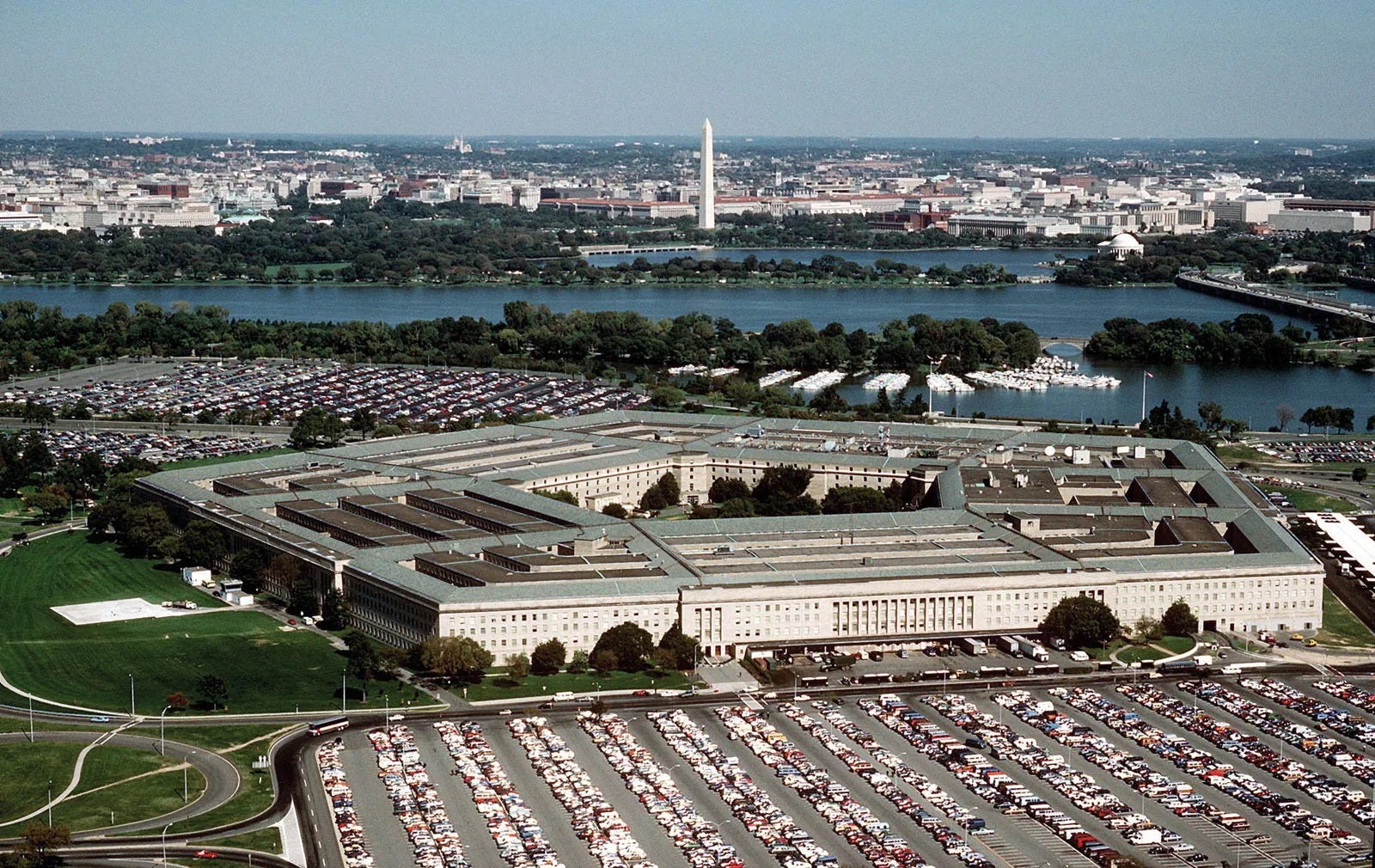
But the financial dominance doesn’t stop there. The petrodollar also gives the U.S. government an extraordinary coercive tool: economic sanctions.
Because so much of global trade is conducted in dollars and cleared through the U.S. financial system, Washington can effectively tell any bank anywhere in the world: “If you process transactions for this country, you lose access to U.S. dollar infrastructure.” Because no major bank can afford to lose dollar access, they’re forced to comply. Pair that with the ability to remove countries from SWIFT – the global interbank messaging system – and the US has the power to cut a country off from the global economy almost entirely, without firing a single shot.
Iran has lived under US economic sanctions for over 45 years. The sanctions began in 1979 after the hostage crisis and have never fully lifted. The most severe period – Trump’s “maximum pressure” campaign, reimposed in 2018 and again in early 2025 – drove the Iranian rial to collapse by more than 90%. Between 2018 and 2022, food prices rose by up to 300%. Working Iranians have spent decades unable to access basic goods and medical care because of their country’s exclusion from a financial architecture designed to benefit the US.
The mechanism that gives the U.S. its economic advantage and the mechanism that allows it to bring a country’s civilian economy to its knees are not separate – they are one and the same.
What’s Happening Right Now
The war didn’t create this vulnerability – it exposed one already forming. In 2024, Saudi Arabia quietly let the original petrodollar agreement expire and has since built the technical infrastructure to settle oil in yuan directly with China, including a $7 billion currency swap and participation in a payment system that bypasses SWIFT entirely. Then came the war.
In response to U.S. and Israeli strikes on Iran, Iran effectively closed the Strait of Hormuz. As of mid-April, tanker traffic through the strait had dropped by 90%. Oil prices surged above $100 per barrel. Gas prices in Europe and Asia spiked by more than 50% in a single week. For working people around the world, that has meant higher prices on everything from gas to groceries.
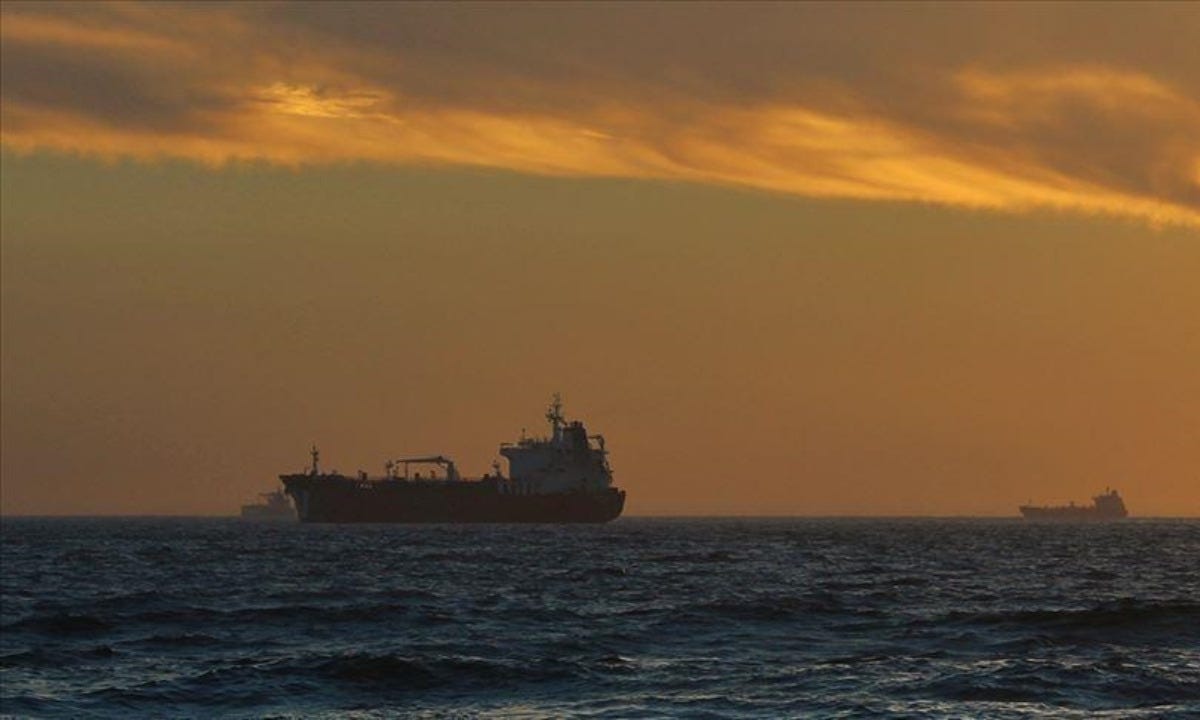
For countries that depend on Gulf oil – which is most of the industrialized world – this is a crisis. Every day the strait stays closed, the cost of energy rises. That’s the context in which Iran announced it may allow oil tankers to pass, but only with a toll paid in yuan to the tune of $2 million. The demand is deliberate: by requiring payment in yuan rather than dollars, Iran is directly targeting the petrodollar system that has kept it under sanctions for half a century.
It’s important to note that this is not a desperate improvisation on Iran’s part; the infrastructure for this has been in operation for years. Since the war began, Iran has shipped at least 11.7 million barrels of crude oil to China through the strait – all of it settled outside the dollar system, paid for in yuan, transported by vessels operating outside Western insurance and tracking systems. China’s alternative interbank payment system, CIPS, processed the equivalent of $24.5 trillion in yuan-denominated transactions in 2024 alone – a 43% increase from the year before. The plumbing was built quietly, over years, precisely for a moment like this.
Now Iran is simply trying to make the criteria explicit: pay a toll in yuan, and your tanker is guaranteed safe passage. Every transaction that clears in yuan rather than dollars is a small erosion of the financial architecture that made U.S. sanctions possible in the first place.
The U.S. response has been to escalate; after peace talks collapsed in mid-April, Trump declared a naval blockade, directing the U.S. Navy to intercept any vessel that had paid Iran’s toll. Washington understands what’s at stake – and is responding with military force to defend not just a shipping lane, but a financial system.
What Comes Next?
The petrodollar isn’t going to collapse next month. The dollar still accounts for roughly 56% of global reserves, and replacing a system this deeply embedded in global financial infrastructure takes time. But the direction things are going is not ambiguous.
Central banks globally have purchased over 1,000 metric tons of gold annually for three consecutive years – a hedge against exactly the kind of dollar dependence that left Russia’s $300 billion in reserves frozen overnight when the Ukraine war began. BRICS nations are building parallel payment infrastructure. China's yuan now settles nearly 30% of China’s $6.1 trillion in global trade. And at the Strait of Hormuz right now, a country with nothing left to lose is running a live experiment in what a post-petrodollar energy corridor looks like.
None of this is inevitable doom for the U.S. economy. But it does raise a question worth sitting with: What would the United States look like if it could no longer rely on the petrodollar?
A transition away from the petrodollar system would certainly be bad for the US capitalist class, who have enjoyed the advantages of easier access to capital – and military protection for financial adventurism abroad – for years. And for the US working class, the end of the petrodollar could mean weathering a period of inflation.
But in the long run, moving on from the petrodollar system could be a good thing for US workers and for the world. A USA that isn’t structurally dependent on oil-backed dollar dominance wouldn’t need to start so many wars, nor continue to spend hundreds of billions of dollars each year on military presence in the Persian Gulf. Instead of focusing all its resources on maintaining its financial and geopolitical hegemony, the US government could redirect these funds toward things its citizens actually need – like more clean energy, better healthcare, more housing, and other public investments that have been underfunded for decades.
As my favorite philosopher Antonio Gramsci put it, “the old world is dying, and the new one is struggling to be born.” The question isn’t whether this system will end; it’s whether what replaces it is designed for the prosperity of all.
– Michael
Better Future covers the ideas and movements helping steer the world toward a more just & sustainable future. If you believe we need clearer thinking and more inspiration for how to make this vision a reality, please become a paid subscriber. Your support will go directly towards producing more stories like this one.
The US still has leverage over Iran...
https://arkominaresearch.substack.com/p/the-strait-of-hormuz-blockade-why
To global leaders and strategic decision-makers:
The rising tension between the United States and Iran in the Strait of Hormuz is being framed as a geopolitical crisis.
This framing is incomplete.
The Contrarian Insight
This is not primarily a military escalation.
It is a system-level exposure event.
The Strait of Hormuz is one of the most critical arteries in the global economy:
~20% of global oil supply passes through it
Energy markets react instantly to disruption
Shipping, insurance, and trade flows are tightly linked to its stability
When conflict emerges here, it doesn’t stay regional.
It propagates globally by design.
The Systemic Failure
Globalization has optimized for efficiency:
Concentrated energy routes
Just-in-time supply chains
Minimal redundancy
This creates a system where: a localized disruption produces global consequences
Recent developments ship seizures, naval blockades, and military orders to engage vessels demonstrate how quickly control over infrastructure becomes leverage.
The result is not just instability.
It is systemic sensitivity to conflict.
The Shift in Thinking
Global leaders must move from:
Conflict management → System redesign
Geopolitical response → Infrastructure resilience
Energy dependency → Energy distribution
The goal is no longer to prevent every conflict.
It is to ensure that conflict does not automatically destabilize global systems.
The Uncomfortable Truth
A system that depends on a single chokepoint for global energy flow is not strategically strong.
It is structurally vulnerable.
And that vulnerability can be exploited intentionally or unintentionally.
A Realistic Path Forward
The future of stability depends on:
Diversifying energy supply routes and sources
Reducing reliance on narrow geographic chokepoints
Building redundancy into global supply chains
Aligning geopolitical strategy with infrastructure design
This is not theoretical.
It is a necessary correction to a system optimized too narrowly for efficiency.